The Climate Crisis Is Also a Health Crisis
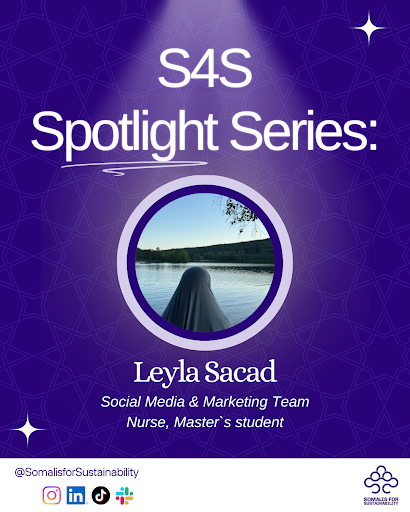
Hello everyone, and welcome to our fourth edition of the S4S Spotlight Series, where we highlight the voices and expertise of our organisation’s members. This edition has been compiled by Leyla Sacad, a nurse and a member of S4S’s Social Media and Marketing Team.
In this spotlight, we will look at climate change through a health lens. Deemed as this century’s “greatest global health threat”, Leyla examines the ways in which climate change and human health are connected, and reflects on the responsibility of the healthcare sector in taking climate action.
When you think of climate change and the climate crisis, what do you imagine? Droughts and floods? Fossil fuels and oil? Global warming? The list goes on, but have you thought of climate change and health?
The healthcare sector is contributing to climate change
As a nurse, I have asked myself if the healthcare sector plays a role in all of this and what that might be. Although it is a sector meant to treat illness and promote health, it is also responsible for contributing to climate change. The healthcare sector is responsible for around 5% of emissions worldwide (World Health Organization, 2025). One of the reasons for this is the widespread use of plastics and single-use materials (Or & Seppänen, 2024, p. 4). I have seen this firsthand in my job working at a hospital. Whether it is medication that is prepackaged in small bags of plastic and then administered to patients by using small plastic cups that are then thrown away immediately, plastics have become a structural part of the healthcare system. The healthcare sector must be held accountable for its role in contributing to global gas emissions, and there is a need for it to transition into a more resilient and robust system.
Recently, S4S went to Belém, Brazil to participate in COP30, the United Nations Conference of the Parties. During this conference, the Belém Health Action Plan was launched (NCD Alliance, 2025). It was signed by more than 40 countries, ultimately recognising the climate crisis as a health crisis. Not only do changes in climate affect our health as human beings, but it also affects the health of the planet and therefore every ecosystem dwelling on it.
Vulnerability to climate change is linked to socio-economic and demographic factors
However, the effects of it are not felt to the same extent in all parts of the world, nor felt the same way in our bodies. Research suggests that marginalised groups such as migrants, racially minoritised groups, and Indigenous communities are more vulnerable to the effects of climate change (Deivanayagam et al., 2023, p. 64). Countries in the Global North, though they represent a small percentage of the world’s total population, are responsible for most of the carbon dioxide emissions that go beyond the safe planetary boundary (Deivanayagam et al., 2023, p. 71). These boundaries are part of a framework earth scientists developed to measure and track the Earth`s “safety limits” and how human activity is affecting various of its natural processes (Planetary Health Alliance, n.d). On the other hand, countries in the Global South, many of whom have been subjected to colonialism and (ongoing) extractivism, bear most of the burden when it comes to the consequences of climate change (Deivanayagam et al., 2023, p. 72). Somalia is a prime example of this. It contributes less than 0.01% of global carbon emissions, yet it is among the countries bearing the brunt of climate change, experiencing recurring droughts and floods, to mention some of the impacts (Ritchie & Rosado, 2025).
Climate change cannot be looked at in isolation, rather it is to be viewed and understood as something that is connected to a wide range of public affairs including politics, economics, food security, social issues, and health. These are areas that are tied to our everyday lives. The effects of climate change can be worsened by already existing socioeconomic factors such as income, health, and housing (Romanello et al., 2025, p. 2845). Factors that can differ extremely, and may not always be easy to change. In addition, for individuals with limited access to basic services such as healthcare and social services, the burden of climate-related events can become more prominent (Johansen et al., 2026). Although climate change is a threat to all human life, it is not a “great equalizer” as some have argued, because the impacts of it won`t affect us in the same way due to existing inequities related to socioeconomic and demographic factors.
The ways in which climate change affects our health
But what is the connection between climate change and human health? The effects of climate change can be described as either direct or indirect. One clear example is air pollution. We depend on oxygen to live, but if the air we breathe in is polluted, it can lead to serious harm. Air pollution kills millions of people every year (Romanello et al., 2025, p. 2806). The burning of fossil fuels contributes significantly to these numbers. In addition to being the primary drivers behind the increased temperature of the Earth, fossil fuels are responsible for more deaths yearly than smoking (Doctors for the Environment Australia, 2024).
The world is getting warmer, and recent data from the World Meteorological Organization (WMO) indicate that 2025 was one of the warmest years on record (World Meteorological Organization, 2026). This development can lead to health-threatening heat and affect our health directly (Romanello et al., 2025, p. 2813). Certain demographics are also more at risk, such as children, the elderly, and people with chronic diseases. Infants are at risk because their immune system (amongst other reasons) has not been fully developed. Older people, on the other hand, are at risk because of the natural processes happening in the body as we age, resulting in a weakened capacity to regulate temperature. People with underlying chronic diseases such as heart, lung, or kidney disease are also particularly at risk. High ambient temperature has also been associated with a risk of negative pregnancy outcomes (Rogne et al., 2024). Climate change can affect our health in direct or indirect ways. Additional impacts include a decline in mental health and forced migration due to extreme weather-events (Romanello et al., 2025, pp. 2804, 2822).
Climate, environment and health go hand-in-hand, and the effects of the climate crisis on health is a public health responsibility. It is important that health is included in all aspects of and talks on climate mitigation and adaptation, because it is an issue that is interconnected with all parts of society and our everyday lives.
On our role as Muslims
We have entered the blessed month of Ramaḍān, alḥamdulillāh, and as sustainability advocates, Islām gives us the blueprint of how to tread on this Earth. As Muslims, we have a duty to live responsible lives that are pleasing to our Rabb. This includes treating the Earth we live on in a good manner, co-exist harmoniously with Allāh's other creations, and take care of our health.
`Abdullah bin `Amr bin Al-`As narrated: Allah's Messenger (ﷺ) said, "O `Abdullah! Have I not been formed that you fast all the day and stand in prayer all night?" I said, "Yes, O Allah's Messenger (ﷺ)!" He said, "Do not do that! Observe the fast sometimes and also leave them (the fast) at other times; stand up for the prayer at night and also sleep at night. Your body has a right over you, your eyes have a right over you and your wife has a right over you." (Sahih al-Bukhari 5199).
Narrated Anas bin Malik: Allah's Messenger (ﷺ) said, "There is none amongst the Muslims who plants a tree or sows seeds, and then a bird, or a person or an animal eats from it, but is regarded as a charitable gift for him." (Sahih al-Bukhari 2320). Our deen truly teaches us everything, including taking climate action.
I would like to leave you with two practical tips:
- Firstly, try your best to avoid wasting food during this blessed month. If you have leftovers, save them till later or share with neighbors. Allāh subhaanahu wa ta`aalaa said in the Qur´aan:
يَٰبَنِىٓ ءَادَمَ خُذُوا۟ زِينَتَكُمْ عِندَ كُلِّ مَسْجِدٍ وَكُلُوا۟ وَٱشْرَبُوا۟ وَلَا تُسْرِفُوٓا۟ ۚ إِنَّهُۥ لَا يُحِبُّ ٱلْمُسْرِفِينَ
O Children of Adam! Take your adornment (by wearing your clean clothes), while praying and going round (the Tawaf of) the Ka’bah, and eat and drink but waste not by extravagance, certainly He (Allah) likes not Al-Musrifun (those who waste by extravagance). (Sūrah Al-Aʿrāf, āyah 31).
- Secondly, when you are performing Wudu, do not let the water continue running when it is not in use to avoid excess water waste.
It was narrated from 'Abdullah bin 'Amr that: The Messenger of Allah ﷺ passed by Sa'd when he was performing ablution, and he said: 'What is this extravagance?' He said: 'Can there be any extravagance in ablution?' He said: 'Yes, even if you are on the bank of a flowing river.'" (Sunan Ibn Majah 425 - Grade: Da'if according to Darussalam, Sahih according to Ahmad Shakir).
May Allāh guide us to perform righteous deeds, accept it from us and forgive us. Allāhumma āmīn.
Connect with Leyla on LinkedIn.
Find Somalis for Sustainability on Instagram, LinkedIn, Tiktok and X.