Maydi Newsletter: May 2026
Hello and welcome to this month’s newsletter!
We hope you all had a blessed Eid Al-Adha, a time of reflection, gratitude, generosity, and togetherness with family and community. In this edition, we reflect on S4S’s recent event in Norway, which brought together a workshop, presentation, and panel discussion on the important links between climate change and oceans.
We’re also looking ahead to the S4S x Somalis in Tech Climate Hackathon, where participants will engage with climate challenges and develop tech-based solutions. Stay tuned for next month’s edition, where we’ll share the key ideas and solutions that emerge from the hackathon.
Thank you for reading, and see you next month!
S4S News
Cross continents, exploring Climate change and our oceans
On 9 May, Somalis for Sustainability, in collaboration with Somalisk Studentforening and Norea, hosted an event exploring the connection between climate change and oceans in the Horn of Africa, with a focus on the role of Somali communities both locally and across the diaspora.
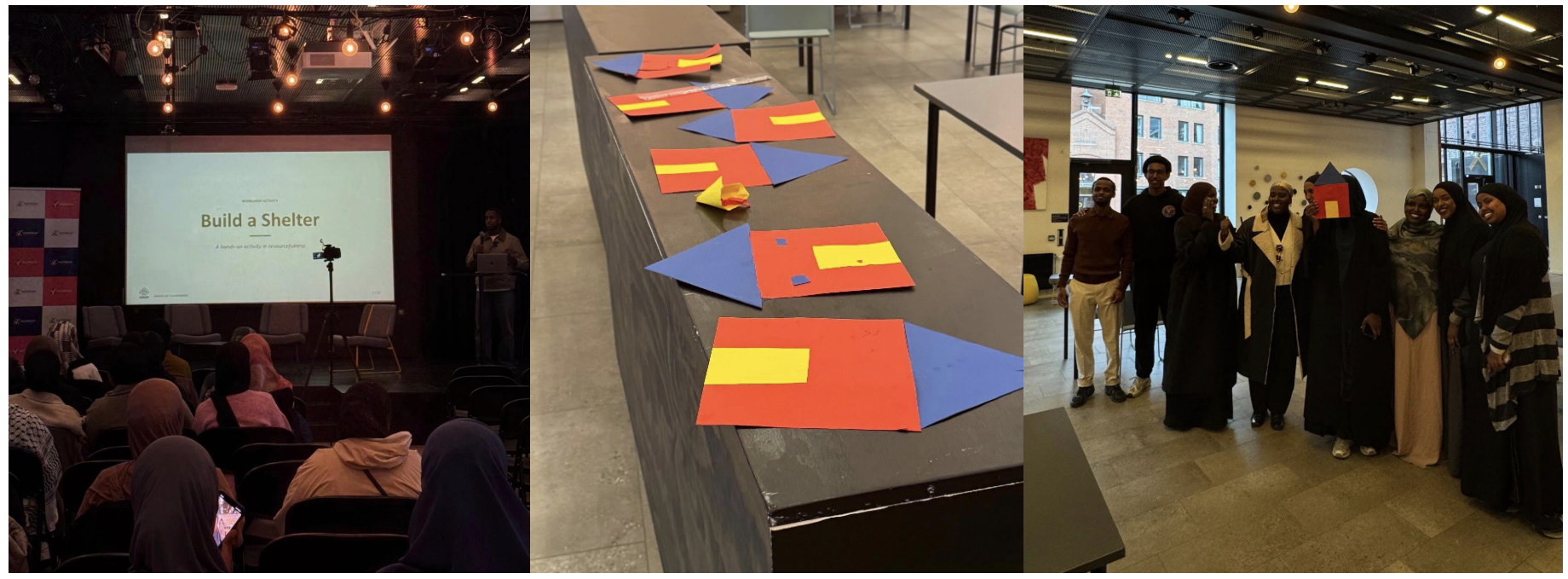
The event began with an interactive “Build a Shelter” workshop led by S4S’s Ridwaan Yousuf. Centred on resourcefulness, the activity served as an icebreaker and encouraged participants to reflect on what shelter means in the context of climate resilience, safety, and community.
This was followed by a talk from Abdirahman M. Omar, an affiliate of the Bjerknes Centre for Climate Research, who spoke about the link between ocean carbon and community resilience. He highlighted the importance of youth participation, particularly in bringing new voices, perspectives, knowledge-building, innovation, and action into climate conversations.
Liban Ahmed, who works in the energy sector, then expanded on the theme of “Oceans as Enablers of Sustainable Energy and Security.” His contribution explored how oceans can support renewable energy, strengthen coastal livelihoods, and contribute to long-term climate and economic security in the region. This provided a strong foundation for a wider panel discussion with Helene Ruden, Director of Ruden Energy.
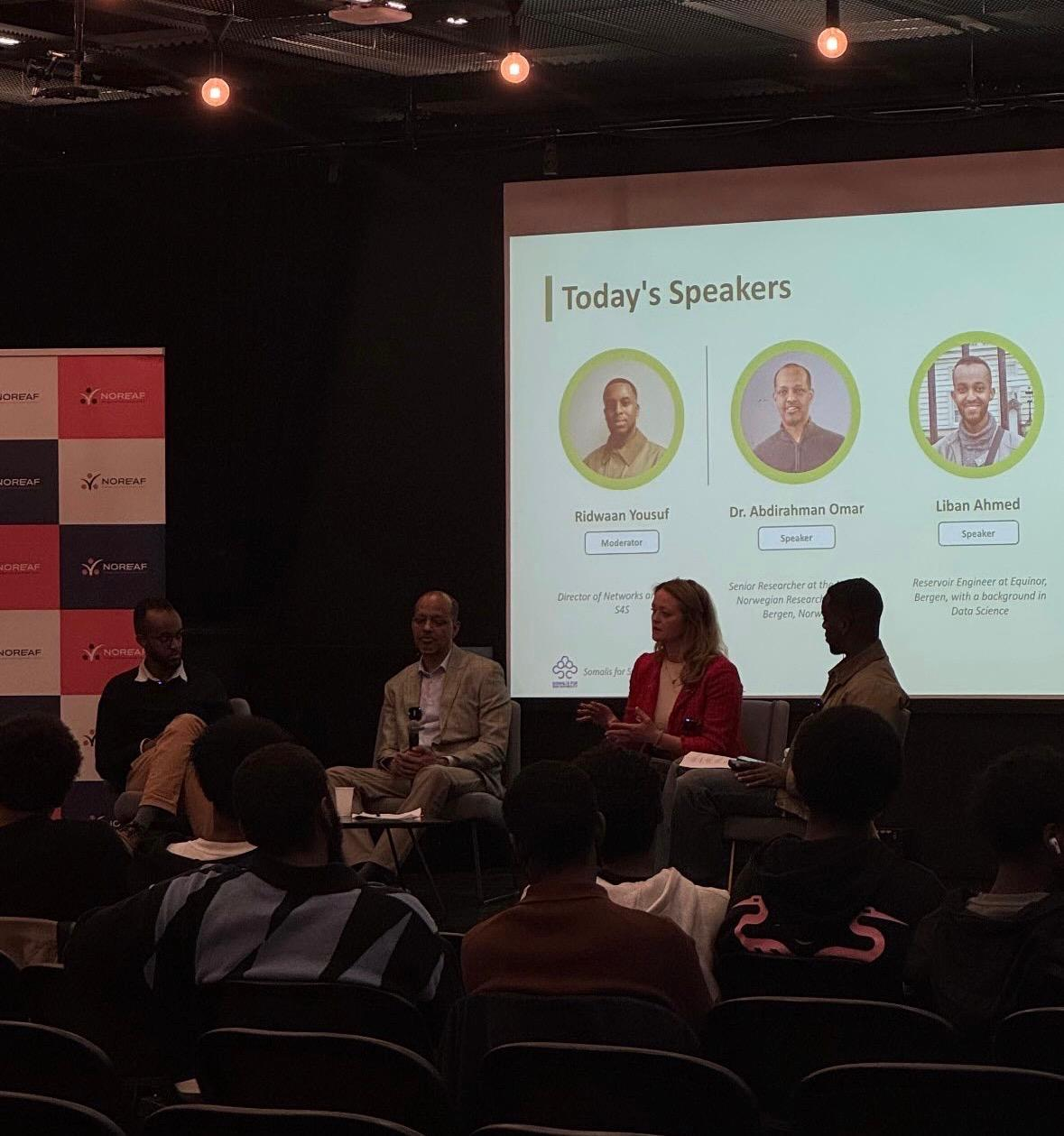
Through engaging conversations, reflections, and shared perspectives, participants learned more about the challenges and opportunities linked to the sea, climate change, and Somalia’s coastal communities. A big thank you to Abdirahman M. Omar, Liban Ahmed, Helene Ruden, and all participants for contributing their knowledge, commitment, and valuable insights
What is the latest in the Horn?
Managing Risk and Building Resilience ⚖️
The State of Climate in Somalia 2026 report released by the Institute of Climate and Environment (ICE) founded by SIMAD University is a briefing paper examining Somalia’s climate outlook, key vulnerabilities, and pathways for building resilience. Somalia’s climate crisis is becoming a long-term structural risk rather than a series of isolated emergencies, with recurrent droughts, erratic rainfall, rising temperatures, floods, and land degradation affecting livelihoods, food security, health, infrastructure, and national development.
The report highlights Somalia’s exposure to both drought and flooding. Five failed rainy seasons between 2023 and 2025 severely disrupted pastoral and agricultural systems, while above-average Gu rainfall in 2026 may bring short-term relief but also increase the risk of flash floods. This shows why climate planning cannot focus on one hazard alone; Somalia needs systems that can anticipate, prepare for, and respond to multiple risks at once.
Risk management is therefore central to resilience in the region. Instead of responding only after disasters occur, Somalia needs early-warning and early-action systems, stronger water storage, climate-resilient livelihoods, restored ecosystems, renewable energy, and climate-informed infrastructure planning. The report’s “Path Forward” emphasises shifting from crisis response to proactive risk management, so communities can reduce losses, protect livelihoods, and make evidence-based decisions before climate shocks escalate.
Pathway to Resilience 📈
The Food and Agriculture Organisation (FAO) Somalia: Emergency and Resilience Plan, 2026–2028 sets out a response framework for strengthening food security, livelihoods and nutrition in a country facing recurrent droughts, floods, conflict, displacement, pests and disease. The report highlights that Somalia’s agriculture, livestock and fisheries sectors remain central to both survival and economic recovery, but they are highly exposed to climate shocks and limited adaptive capacity.
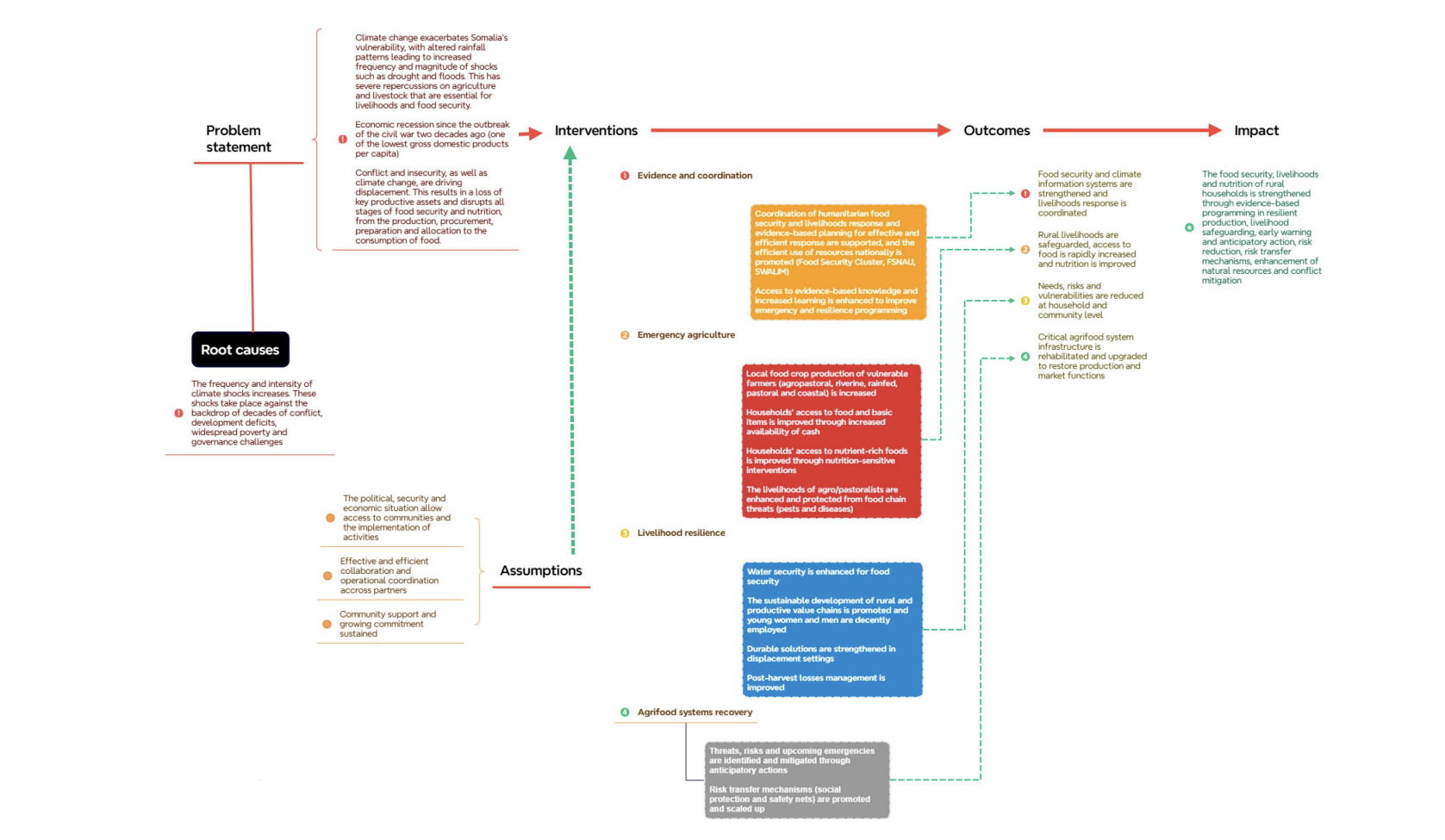
The key solutions outlined include strengthening food security and climate information systems, expanding emergency agricultural support, building livelihood resilience, and supporting agrifood system recovery. Through evidence-based and shock-responsive programmes, FAO will work with local partners to boost agricultural, livestock and fisheries production, improve water infrastructure and market access, and integrate disaster risk reduction and anticipatory action to improve food security, livelihoods and nutrition among rural households.
The plan also focuses on practical interventions such as drought-tolerant seeds, livestock vaccination and treatment, fishing equipment and storage, cash and voucher support, nutrition-sensitive agriculture, water infrastructure, post-harvest loss reduction, and support for women, youth, displaced people and host communities. Overall, FAO’s approach is to move beyond short-term emergency response by helping communities prepare for shocks, protect productive assets, restore livelihoods quickly, and build more resilient rural food systems.
Word of the Month: Aqoon (Aa-qoon) Knowledge
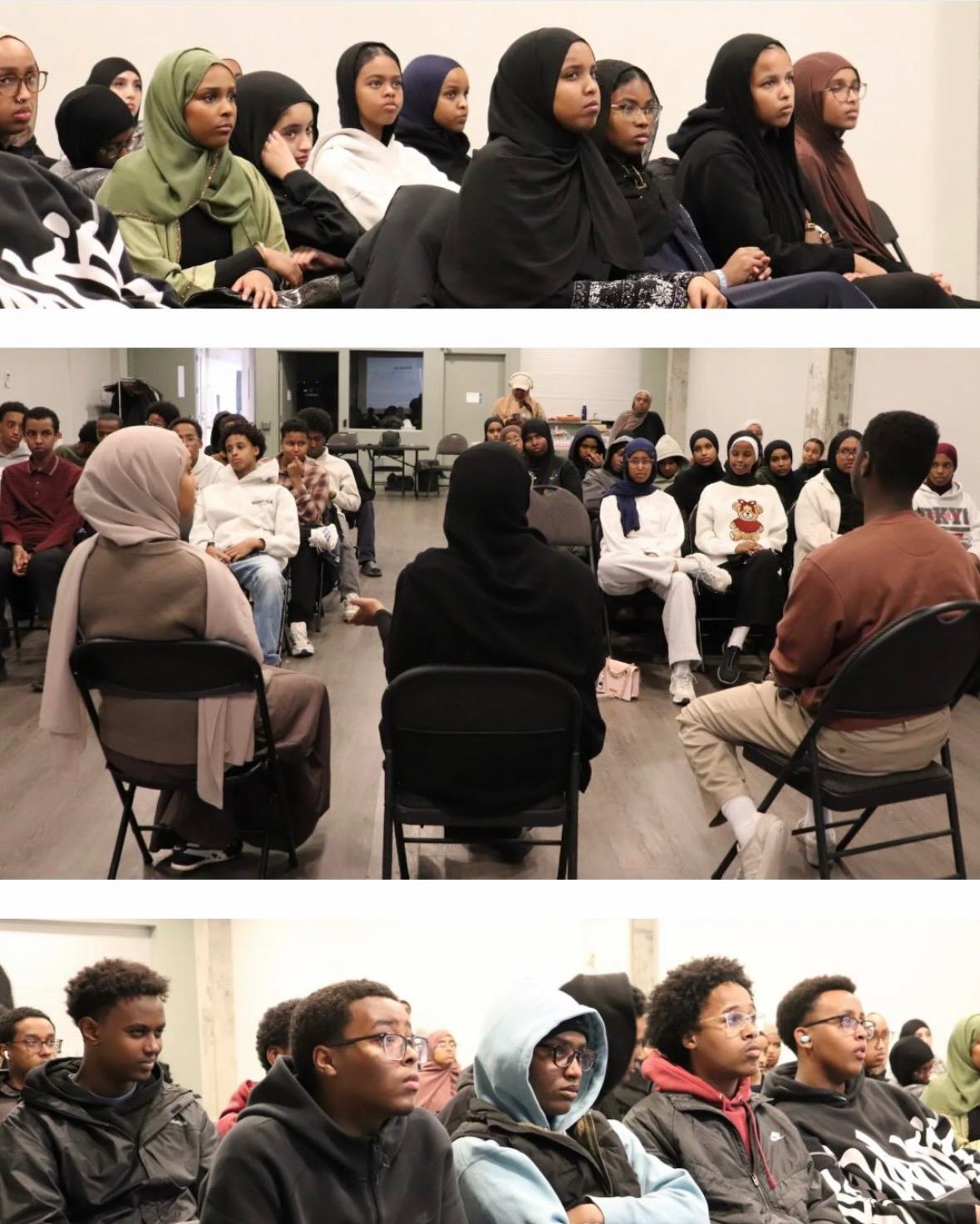
Climate literacy workshop for high school students in Toronto, hosted by S4S and Saysomaali (Image Credit: Member of our Community) .
In Somali culture, knowledge sharing is central to community, survival, social cohesion, and the preservation of history. As a historically oral society, Somalis have passed down wisdom, genealogy, values, and survival skills through storytelling, poetry, proverbs, and communal gatherings.
This tradition is especially important for climate resilience. Shared knowledge helps communities understand seasonal changes, manage water and grazing routes, protect livestock, and respond to droughts, floods, and displacement. It also strengthens cooperation and collective decision-making during times of environmental stress.
As an organisation, S4S continues this tradition by sharing knowledge with the community through events, webinars, newsletters, and educational series. By creating spaces for learning and dialogue, S4S helps connect traditional Somali knowledge with modern climate information, supporting locally grounded solutions that protect livelihoods, preserve the environment, and strengthen Somalia’s resilience for the future.
Find Somalis for Sustainability on Instagram, LinkedIn, Tiktok and X.