Maydi Newsletter: June 2026
Hello and welcome to this month’s newsletter!
In this edition, we are excited to share highlights from our much-anticipated Climate Hackathon in collaboration with Somalis in Tech, where participants explored innovative solutions linked to four key UN Sustainable Development Goals.
We also cover the latest climate news from the region, including Somalia’s participation in the annual UN Climate Change June Meetings in Bonn, Germany, where discussions focused on advancing NDC implementation through integrated climate and health solutions. Finally, we look at the emerging dual climate risks facing the region, with forecasts pointing to both dry conditions and heavier rainfall later in the year.
Thank you for your time, we hope you enjoyed this month’s updates.
S4S News
Climate Hackathon 🌳💻🌍
At the end of May, we were delighted to host our inaugural Climate Hackathon in partnership with Somalis in Tech, bringing together a talented group of innovators, technologists, and sustainability enthusiasts to tackle some of the most pressing climate challenges facing the Somali Horn. Over the course of the weekend, participants worked in teams to design technology-driven solutions addressing issues linked to climate resilience, environmental protection, and sustainable resource management.
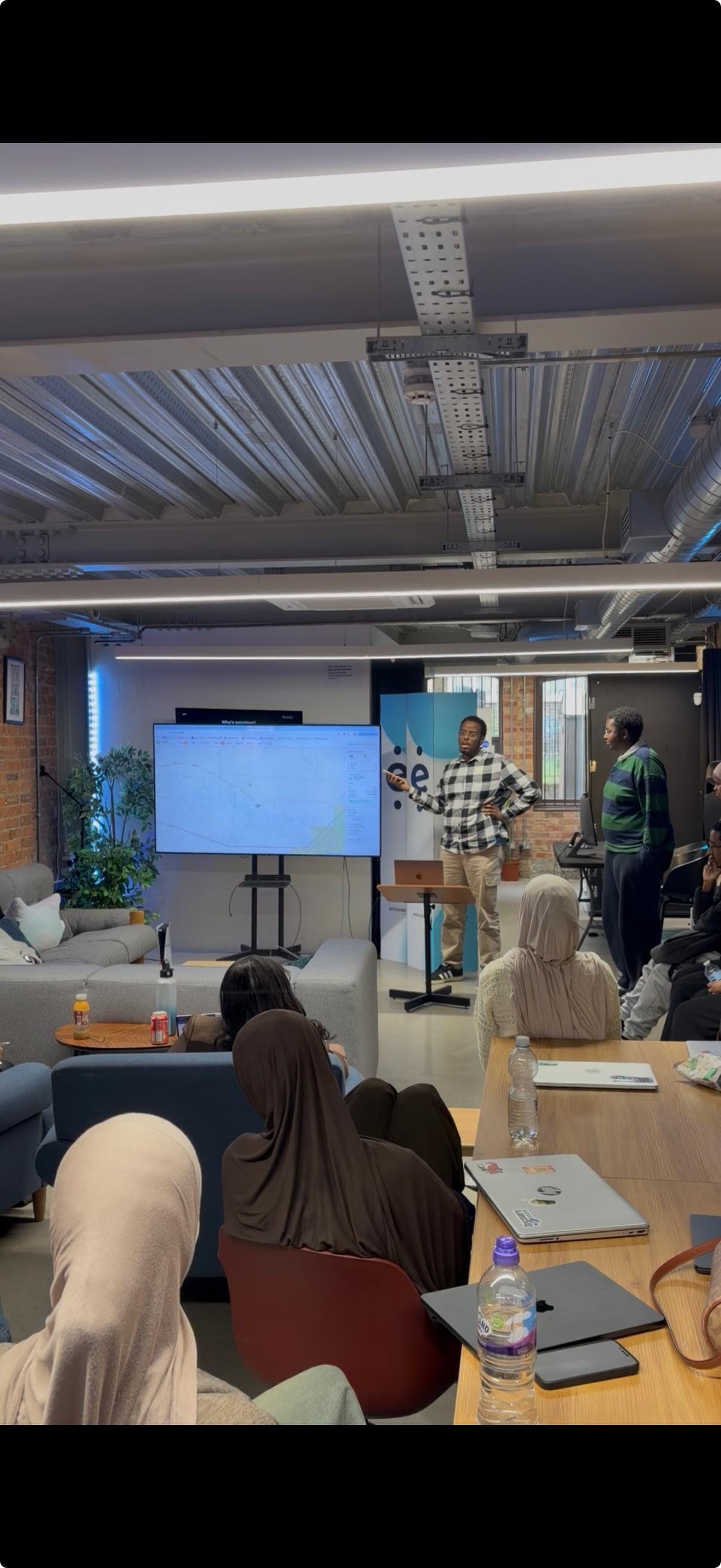
The hackathon encouraged participants to develop practical solutions aligned with the UN Sustainable Development Goals, with a particular focus on strengthening community resilience and supporting sustainable development across the region.
The results were nothing short of inspiring. Teams developed a range of innovative concepts, including a soil degradation monitoring platform (Nolol), a deforestation tracking and charcoal reduction platform (Hakad), a drought forecasting and early warning system (Abaar Call), and a water source location service (eRaadi). Each project demonstrated the potential of technology to deliver meaningful climate solutions tailored to local needs.
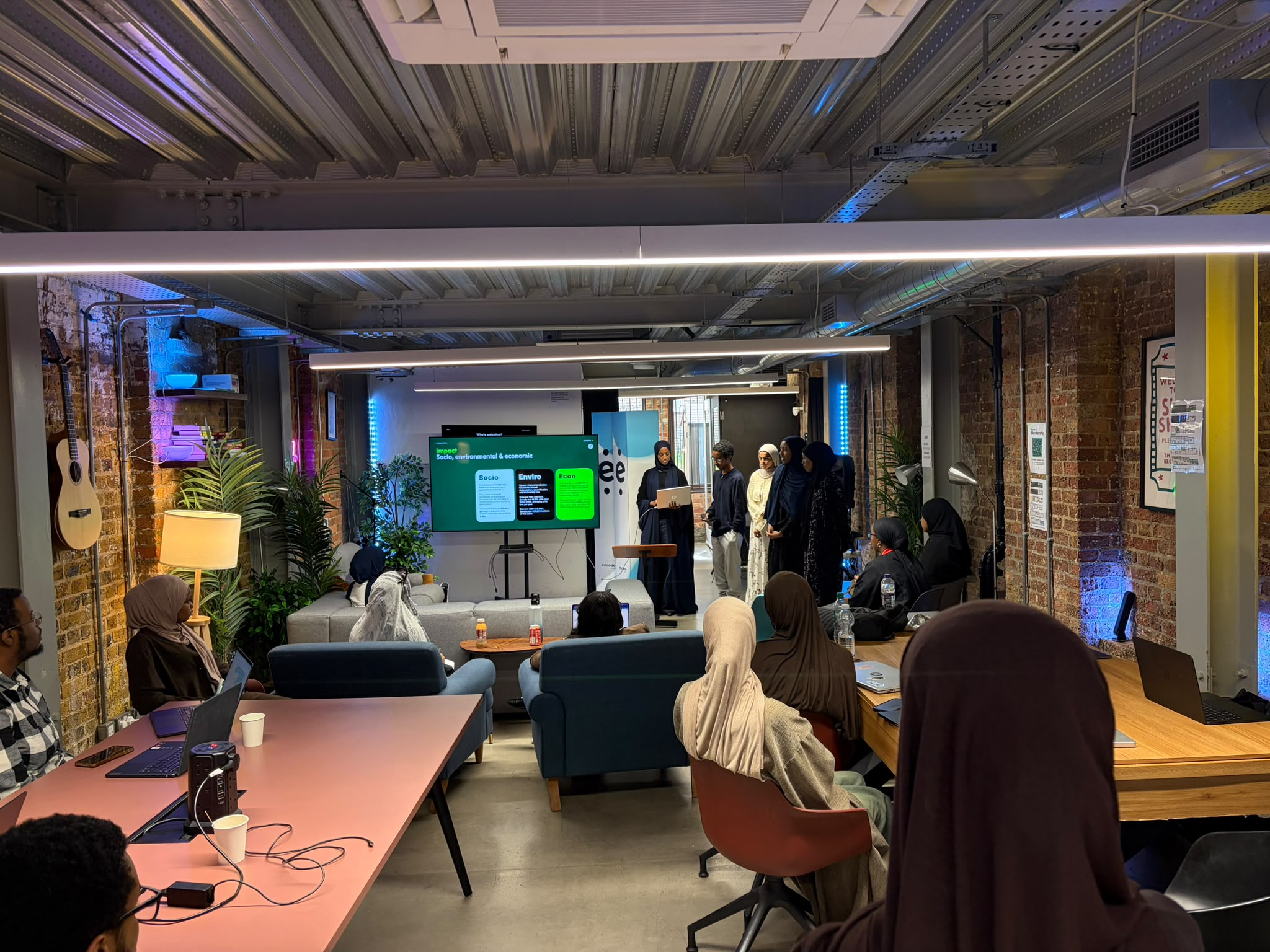
While Team Four's eRaadi impressed the judging panel and secured first place, every team showcased remarkable creativity, technical ability, and commitment to addressing climate challenges. The event concluded with project presentations, feedback from industry judges, and discussions on how participants can continue developing their ideas beyond the hackathon.
We would like to thank all participants, mentors, judges, and partners who helped make the event such a success, and we look forward to supporting the continued growth of these promising solutions in the months ahead.
What is the latest in the Horn?
Somalia advances climate and health priorities at SB64 📈
At the UNFCCC June Climate Meetings in Bonn, Somalia’s Ministry of Environment and Climate Change participated in a side event on advancing Nationally Determined Contribution implementation through integrated climate and health solutions.
The discussion focused on how countries and cities can turn climate commitments into practical action by linking climate policy with public health, urban planning, clean air, sustainable transport, food systems, cooling, and resilience. Rather than treating climate change only as an environmental issue, the event highlighted the need for cross-sector solutions that protect communities while also supporting emissions reduction, adaptation, and a just transition.
Dr Abdullahi Khalif from Somalia’s Ministry of Environment and Climate Change spoke at the event, highlighting Somalia’s experience in connecting climate action with health, food security, water security, development, and human security. His contribution reinforced the importance of ensuring that Somalia’s NDC implementation is not only policy-driven, but also centred on the real conditions facing climate-vulnerable communities.
For Somalia, this is particularly important. Climate change is already affecting health and livelihoods through extreme heat, drought, water insecurity, food insecurity, displacement, and pressure on urban areas. By connecting climate policy with health outcomes, Somalia can strengthen its national climate plans while also addressing the everyday risks faced by communities.
A key Somalia-specific focus was sustainable cooling, which is increasingly important as temperatures rise and heat risks intensify. Cooling is not only about comfort. It is connected to public health, food storage, medicine and vaccine preservation, productivity, and the resilience of homes, schools, health facilities, and cities.
The event signals a broader shift in Somalia’s climate agenda: from climate ambition on paper to implementation that is practical, people-centred, and linked to national development. It also reinforces the importance of coordinated action between national government, cities, health experts, climate institutions, and international partners.
Somalia faces dual climate risks in 2026 ⚖️
A recent regional climate outlook from the IGAD Climate Prediction and Applications Centre has warned that the Greater Horn of Africa may face two contrasting climate risks during the remainder of 2026: unusually dry conditions between July and September, followed by wetter-than-normal conditions during the October to December rainy season.
For Somalia, this means climate planning must prepare for both drought and flood risks. While enhanced rainfall later in the year could support agricultural production, replenish water sources, and improve rangeland conditions, it could also increase the risk of flooding and flash floods in vulnerable areas.
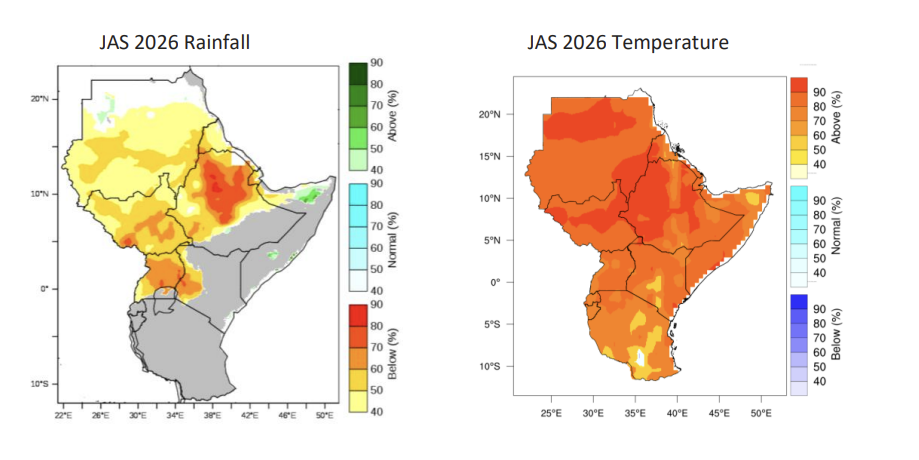
This is particularly important for Somalia, where communities are already facing the combined pressures of drought, food insecurity, displacement, water shortages, and fragile livelihoods. The forecast highlights the need for early preparedness, stronger early warning systems, anticipatory action, and better coordination between government, humanitarian actors, local communities, and climate institutions.
Rather than responding only after climate shocks occur, Somalia has an opportunity to use seasonal forecasts to prepare communities in advance. This includes supporting pastoralists and farmers, protecting flood-prone areas, strengthening water management, and ensuring that climate information reaches the people most at risk.
Word of the Month: Beeraha (Be-raa-haa) Agriculture
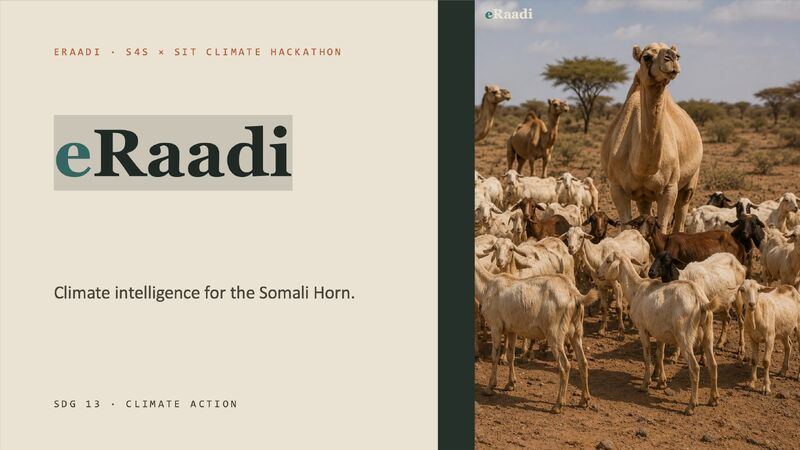
eRAADI winners of the Somalis for Sustainability x Somalis in Tech Climate Hackathon (Image Credit: Member of our Community)
Climate-smart agriculture refers to farming, livestock, and food production practices that help communities adapt to climate change, protect livelihoods, and prepare for shocks such as drought, floods, heat, and water scarcity.
For Somalia, this is especially important for pastoralist and agro-pastoralist communities who rely on access to water, pasture, food sources, and timely climate information.
A strong example is eRaadi, the winning project from the Somalis for Sustainability x Somalis in Tech Climate Hackathon. Built in 48 hours, eRaadi is a USSD platform that helps Somali pastoralists find wells and food sources using existing humanitarian data, without internet or a smartphone.
Through a basic phone, pastoralists can dial a code, receive information in Somali, find nearby wells with water, and report dry wells. These updates can then support other families and help NGOs respond faster through a live map showing well status and food sources.
eRaadi shows climate-smart agriculture in action: practical, local, data-driven, and accessible to the communities most affected by climate shocks.
🗣 Upcoming events/ news:

Whether you’re completely new to sustainability or looking to grow in your expertise, join us for roundtable discussions with Westminster’s Environment Team and network with others exploring green skills and careers.
📅 New Date: Thursday 2 July
⏰ Time: 5.30-8pm
📍 Location: Westminster City Hall, SW1E 6QP
Find Somalis for Sustainability on Instagram, LinkedIn, Tiktok and X.